Milk thistle is the ingredient behind most "liver support" products. The honest research picture is more mixed than the marketing usually lets on — here's what studies actually found.
Milk thistle — specifically its active compound, silymarin — is the ingredient behind the large majority of "liver support" and "liver detox" products on the market. Before evaluating any specific product, it's worth knowing what the actual research on this ingredient shows.
Mayo Clinic's summary: research on milk thistle's effects on liver disease, including cirrhosis and hepatitis C, has shown mixed results.
The NIH's more skeptical finding: a systematic review and meta-analysis of 23 trials, summarized by the NIH's National Center for Complementary and Integrative Health, concluded that milk thistle is no better than placebo as a treatment for hepatitis C specifically. A separate systematic review of 29 randomized controlled trials (3,846 participants) found milk thistle's effect on liver enzyme levels remains "elusive" — not clearly established either way.
The more promising side: some studies on non-alcoholic fatty liver disease (NAFLD) have shown improvement in liver enzymes and imaging findings after milk thistle supplementation. The NIH's own StatPearls resource notes there's currently "no firm clinical evidence to recommend silybin or silymarin clinically," while acknowledging ongoing research interest given its generally favorable safety profile.
Commercial milk thistle products don't always contain the labeled amount of silymarin. Research analyzing food supplement preparations has found some products contain lower concentrations than expected, attributed to poor-quality raw material and, in some cases, suspected deliberate adulteration. This is a documented, real supply chain issue — not a generic supplement warning.
Some liver support products list specific, named ingredients with disclosed doses — which allows a buyer to research each component individually against the evidence above. Others use a generic "proprietary blend" or ingredient count without naming components. That's worth noting as a real transparency gap: without knowing what's actually in a product, it's not possible to compare it meaningfully against the milk thistle research (or any other specific ingredient's evidence) discussed here.
Liver Complex is formulated as a blend of 12 active ingredients, but the specific ingredients aren't named on the public product page — only the count. That's a real limitation worth knowing upfront: we can't compare its formula directly against the milk thistle research above, or verify whether it uses the same well-studied compound, without that disclosure.
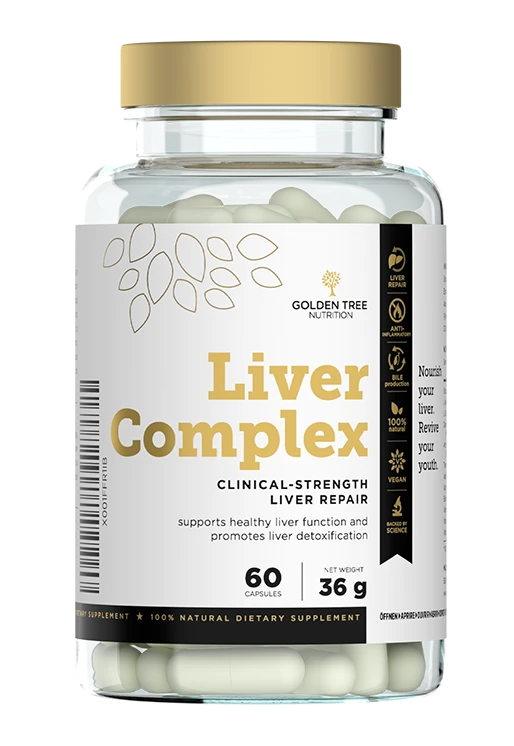
GMP-certified 12-ingredient blend for liver support.
From £44.90Genuinely mixed evidence. Mayo Clinic describes mixed results, and an NIH-summarized review of 23 trials found milk thistle no better than placebo for hepatitis C. Some NAFLD studies show more promise, but the overall evidence isn't conclusive.
Generally yes, considered safe and well-tolerated at standard and even higher doses in studies. Avoid if allergic to ragweed or related plants; use caution during pregnancy due to limited research.
Commercial products don't always contain the labeled silymarin concentration, due to poor raw material quality and, in some cases, suspected deliberate adulteration — a documented supply chain issue.
Worth noting as a transparency gap. A generic "proprietary blend" without named ingredients makes it impossible to independently research what you're taking or compare it to specific ingredient evidence.