Kitchen Guide

How to Choose a Chef Knife: What Actually Matters

Skip the brand hype. Balance, steel, tang, and fit in your hand matter more than the logo on the blade — here's how to evaluate any knife using those factors.

6 min read Sourced from Michelin Guide, Cordon Bleu, professional bladesmiths
Real buying criteria, no brand ranking
Same factors any knife expert checks

Of everything in a kitchen, nothing gets used more than a chef's knife — yet many people pick one based on price or a logo, then wonder why it never feels quite right. The truth is a knife's quality comes down to a handful of concrete factors, not marketing. Here's what to actually check.

Blade Length: The 8-Inch Sweet Spot

Sizing

Why 8 Inches Wins for Most Cooks

An 8-inch blade handles vegetables, herbs, and proteins with enough capacity while staying easy to control. 6-inch knives feel less intimidating for beginners but struggle with larger cuts. 10-12 inch blades suit bigger kitchens or those who regularly break down large pieces of meat, but they require more skill to handle safely. If you're buying your first serious knife, 8 inches is the well-tested default.

Tang and Balance

Construction

What "Full Tang" Actually Means

The tang is the portion of the blade metal that extends into the handle. A full tang runs the entire length of the handle — visible as a metal strip along the top and bottom — and adds real stability, balance, and durability. It's one of the few construction details worth checking on a spec sheet before buying, since it directly affects how the knife feels during hard use.

The pinch grip test: hold the knife with your thumb and forefinger on the blade itself, just in front of the handle — not around the handle like a hammer. A well-balanced knife feels like a natural extension of your hand in this grip, without feeling heavy at the tip or the butt of the handle.

Steel Type

Steel TypeEdge RetentionMaintenanceBest For
Stainless SteelModerateLow — resists rustBeginners, low-maintenance cooks
High-Carbon StainlessGoodLow-moderateBalance of sharpness and ease
Carbon SteelExcellentHigh — needs drying, oilingExperienced cooks who maintain blades regularly

For most home cooks, stainless or high-carbon stainless strikes the right balance — sharp enough to perform well, forgiving enough that a missed drying session won't cause rust overnight.

Handle Material

Ergonomics

Wood, Composite, or Synthetic

Wood handles feel classic and warm but need proper drying to avoid cracking or bacterial buildup over time. Composite and synthetic handles (like G10 or polymer blends) are generally lower-maintenance and more resistant to moisture damage. Whichever material, comfort matters more than aesthetics — you'll be holding this knife for thousands of hours over its lifetime.

Where Matsato Fits

Matsato is a santoku-style knife built with 4CR14 stainless steel and a beechwood handle — worth evaluating against the same factors above: check the tang construction, do the pinch-grip balance test if you can, and confirm the steel and handle match your maintenance comfort level before deciding if it's the right daily knife for you.
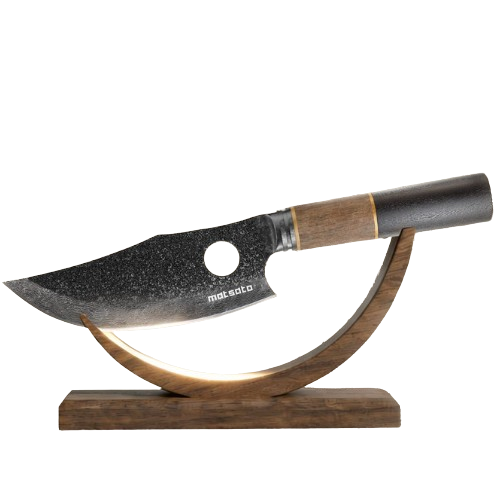
Matsato chef knife

Matsato — Full Honest Review

Real specs, pricing, and an honest FAQ.

Frequently Asked Questions

What size chef knife should a beginner buy?

An 8-inch blade is the sweet spot for most home cooks — enough capacity for vegetables, herbs, and proteins, without being unwieldy. 6-inch knives feel less intimidating but struggle with larger items.

What does "full tang" mean and does it matter?

The tang is the blade metal that extends into the handle. A full tang runs the entire handle length, adding stability, balance, and durability — worth checking, especially for a daily-use knife.

What's the difference between a chef's knife and a santoku?

A classic chef's knife has a curved blade for a rocking chop motion. A santoku typically has a flatter edge suited to up-and-down chopping. Both are versatile; the right one comes down to which motion feels natural to you.

What steel type is best for a beginner?

Stainless or semi-stainless is generally easier to maintain for beginners. High-carbon stainless offers a good balance of edge retention and manageable upkeep without a fully carbon blade's rust-prevention routine.

How do I know if a knife feels balanced?

Try the pinch grip: thumb and forefinger on the blade, just in front of the handle. A well-balanced knife feels like a natural extension of your hand, weight evenly distributed.

*This guide reflects publicly available buying advice from the sources cited above. Individual preference plays a real role in knife selection — handling a knife before buying, where possible, remains the best way to confirm fit.