The FDA has approved exactly one CBD product — and it's not for anxiety or relaxation. Here's the honest evidence picture behind one of wellness' most-marketed ingredients.
Hemp-derived CBD gummies are marketed for everything from anxiety to sleep to general relaxation. The honest evidence picture is more limited and more regulated than most product pages let on — but it's not nothing, either. Here's the full, balanced breakdown.
The FDA has approved exactly one CBD product: Epidiolex — for certain rare seizure disorders specifically. Nonprescription CBD gummies, oils, and other supplement-category products marketed for anxiety, sleep, relaxation, or general wellness have not received FDA approval for any of those claims. That's a real regulatory fact, not a technicality — it's why you'll see hedged language like "supports relaxation" rather than direct treatment claims on legitimate product pages.
The evidence here is genuinely mixed, and worth presenting both sides of honestly.
The skeptical side: a Cleveland Clinic psychiatrist states plainly there's no conclusive scientific evidence that CBD relieves anxiety, and GoodRx summarizes the research as showing mixed results with insufficient evidence to say for sure.
The supportive side: a large case series in The Permanente Journal found anxiety scores decreased in 79.2% of patients within the first month — a meaningful real-world signal, though this was observational chart review, not a randomized controlled trial. Smaller open-label pilot studies have shown similar promise, but without placebo controls, that evidence is weaker than a true double-blind trial.
The honest summary: real research exists and shows promise, but the strongest study designs (randomized, placebo-controlled trials) are still limited, and the FDA hasn't approved any nonprescription CBD product for this use.
Labeling accuracy is a documented problem in this category. Over-the-counter CBD products may contain unlabeled THC or other contaminants, and quality varies significantly by manufacturer. Third-party lab testing and a published certificate of analysis are meaningful signals a brand takes this seriously — not every product provides them.
VitalHemp is a THC-free, hemp-extract gummy combining turmeric and chamomile alongside hemp extract. It's worth remembering that nearly every study cited above examined CBD as an isolated compound, not any specific finished gummy — so a product's real-world effect depends heavily on whether its actual content matches its label, which is where third-party testing and quality documentation matter most.
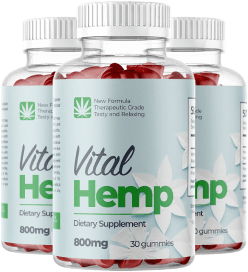
THC-free hemp-extract gummies with turmeric and chamomile.
From $89.95 CADNo. The only FDA-approved CBD product, Epidiolex, is approved for certain rare seizure disorders — not anxiety, sleep, or general wellness. Nonprescription CBD supplements haven't received FDA approval for these claims.
Genuinely mixed evidence. A Cleveland Clinic psychiatrist says there's no conclusive evidence, while a large case series found anxiety scores decreased in 79.2% of patients within a month — though that was observational, not a randomized trial.
Labeling accuracy is a documented issue — OTC products may contain unlabeled THC or contaminants. Third-party lab testing and published certificates of analysis are meaningful quality signals not every brand provides.
Federally, CBD from hemp with under 0.3% THC was legalized by the 2018 Farm Bill. State laws vary, and the FDA has stated selling it as an unapproved supplement is technically against regulations, though enforcement is limited.
Not automatically. Nearly every cited study examined CBD as an isolated compound, not a finished gummy. Real-world effect depends on whether actual content matches label claims.