These get marketed as interchangeable, but they solve genuinely different problems. Here's how each actually works — and an honest limitation of Bluetooth tracking most product pages skip.
"Tracker" gets used as a catch-all term online, but Bluetooth item trackers and GPS trackers work on completely different principles — and picking the wrong type for your situation means real disappointment. Here's the honest technical breakdown.
A Bluetooth tracker doesn't know its own location. It broadcasts a short-range Bluetooth Low Energy signal that your phone detects directly when nearby. When you're farther away, it relies entirely on a crowdsourced network — other people's phones anonymously detecting the signal and relaying its last-known location back to you. No monthly fee; battery typically lasts a year or more.
A GPS tracker receives signals from multiple satellites and calculates its own location via trilateration — it genuinely knows where it is, independent of nearby phones. Cellular-connected models (like OBD-II vehicle trackers) transmit that location data in real time via a data connection, which typically requires a monthly subscription.
| Factor | Bluetooth Tracker | GPS Tracker |
|---|---|---|
| Live tracking | No — last known location | Yes — real time |
| Range | Nearby / network-dependent | Worldwide with cellular |
| Accuracy | Tens of meters | 5-10 meters outdoors |
| Battery life | ~1 year+ | Days to weeks (cellular models) |
| Monthly fee | None | Usually $5-25/month |
| Best for | Keys, wallets, bags, luggage | Vehicles, roaming pets, theft recovery |
Worth knowing before you rely on one: if a Bluetooth tracker is somewhere with no nearby compatible phones — a remote area, a rural location, or simply a low-traffic spot — it won't update its location at all until a device comes within range. This isn't a defect specific to any brand; it's how crowdsourced networks fundamentally work. Bluetooth trackers work best in populated areas and can go silent elsewhere.
iTagPro is a Bluetooth item tracker — evaluate it against the crowdsourced-network limitation above, and expect it to shine for nearby everyday items rather than long-distance or remote tracking. iTagPro Car is an OBD-II GPS tracker with cellular connectivity, built for the real-time vehicle tracking use case described above.
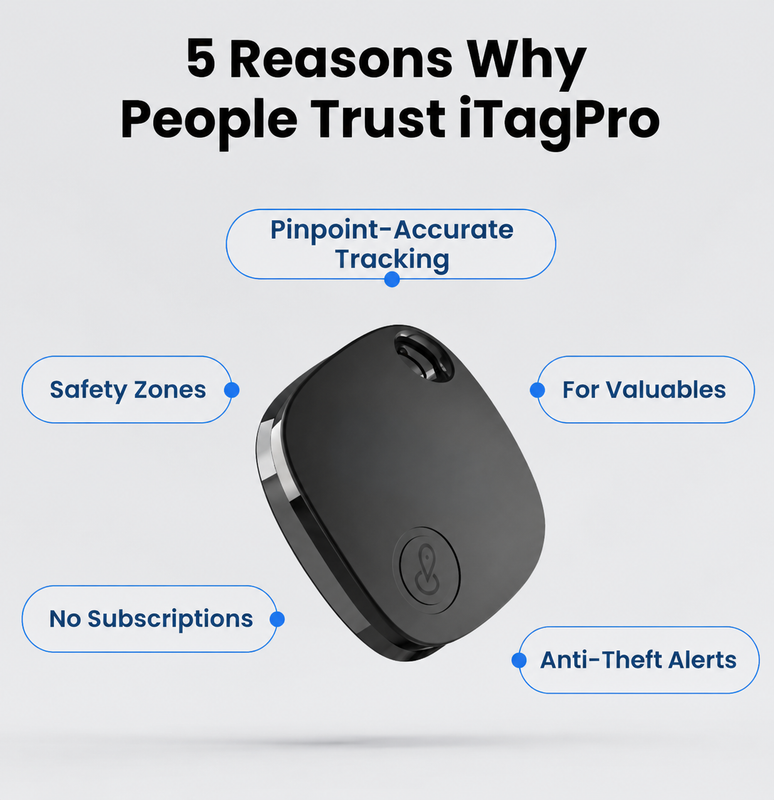
Bluetooth item tracker for keys, wallets, luggage, and pets.
From $32.99
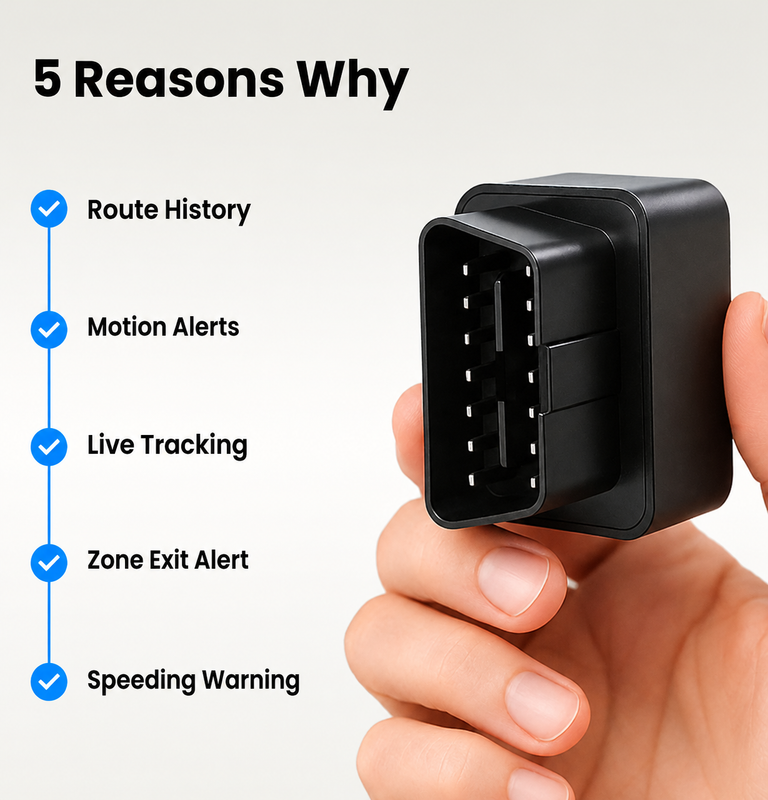
OBD plug-in GPS tracker with SIM-based real-time location.
From $59.99It doesn't know its own location — it broadcasts a short-range BLE signal your phone detects directly when nearby (30-400 ft). Farther away, it relies on a crowdsourced network of other people's phones relaying its last-known location.
It won't update its location until a compatible device comes within range — a real limitation of crowdsourced networks, not a brand-specific defect. Works best in populated areas.
Standard GPS provides 5-10 meter accuracy outdoors. Bluetooth accuracy is typically tens of meters and depends on nearby device density. GPS accuracy drops indoors or in dense urban areas.
Usually yes, typically $5-25/month for cellular connectivity. Bluetooth trackers generally have no ongoing fee, relying on the free crowdsourced network instead.
Bluetooth for everyday nearby items — keys, wallets, bags, luggage. GPS for anything moving independently over distance or needing real-time monitoring — vehicles, roaming pets, theft recovery.