This category gets marketed hard, and the claims sound technical and convincing. Here's what independent electrical experts actually say — plainly, with sources.
Small plug-in boxes promising to cut your electric bill by 30, 40, even 50% are everywhere online. The pitch usually mentions "power factor," "dirty electricity," or "voltage stabilizing." Here's the honest, electrical-engineering-grounded answer to whether any of that translates into a smaller bill.
The core electrical fact: in the US and most similar markets, residential electricity bills are calculated from real power consumption — kilowatt-hours (kWh) — which is what your appliances actually draw to run. A small plug-in box cannot reduce the kWh an appliance uses to operate; it doesn't interrupt or reduce that flow of electricity at all. Independent electrical safety testers in the UK have described the marketing language around these devices — "balancing current," "cleaning dirty electricity" — as using real-sounding terms that don't correspond to anything that affects a home bill.
One investigation put it well: claiming a device saves energy from appliances that aren't running is like claiming to improve your car's gas mileage while it's parked. It sounds technical, but doesn't hold up once you look at how the billing actually works.
This is the real concept these products borrow language from — and it's a genuine practice, just not for the setting it's being marketed to.
Where it's real: power factor correction is a legitimate, established technique in large industrial and commercial facilities running heavy motors and machinery, where utilities sometimes bill separately for poor power factor. Where it isn't: homes simply don't use enough reactive power for this to register. Residential utility meters bill purely on real power (kWh) — the power factor of your home's load doesn't change that number, according to multiple independent electrical sources including UK safety testing organizations.
StopWatt is a plug-in power factor device, UL approved and RoHS compliant. Being UL-listed is a real, meaningful safety certification — but it's a safety standard, not a verification of bill-reduction claims. Per the electrical facts above, don't expect a dramatic drop in your monthly bill from any device in this category, StopWatt included. If you're drawn to it for the UL-listed build quality or as a mild surge-protection layer, that's a more grounded reason to consider it than an expectation of major savings.
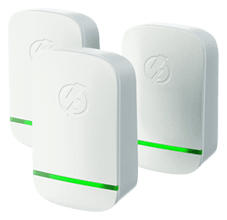
Real specs, honest expectations, pricing, and an honest FAQ.
Generally no, not meaningfully. Residential bills are based on real power (kWh) — actual appliance consumption. Power factor, what most of these devices target, doesn't affect that measurement for typical homes.
It's a genuine, established practice in large industrial and commercial settings with heavy machinery. Homes don't use enough reactive power for it to register on a residential bill, which is billed purely on real energy consumption.
Not necessarily fraudulent — many ship a real device. The issue is the marketing claim: some contain minimal functional components, and even functional ones rarely produce a measurable, verifiable bill reduction at home.
Efficient appliances, LED lighting, smart thermostats, better insulation, and unplugging standby power draws — changes with real, measurable, independently verified impact.
If a specific product is UL 1449-listed as a surge protective device, that certification covers a genuinely useful function — protecting equipment from voltage spikes — separate from any bill-reduction claim.