From prescription medication to in-clinic laser to cosmetic daily-care products — here's what each approach actually does, backed by real clinical sources, not marketing.
If you've caught yourself staring at a yellowing, thickening toenail and wondering what's actually going on — you're not alone, and you're not overreacting. It's one of the most common nail complaints there is, and it doesn't fix itself. This guide walks through what causes it, how to tell what you're actually dealing with, and every real treatment category — prescription, laser, over-the-counter, and cosmetic — including where each one falls short, so you can figure out what fits your situation.
Nail fungus (onychomycosis) usually shows up gradually, which is why it's easy to dismiss at first. Here's what people most commonly notice, per Healthline and Harvard Health:
Often the very first sign — a discoloration that starts small and tends to spread across the nail over time.
The nail can become noticeably thicker or misshapen as the infection progresses, sometimes uncomfortable inside shoes.
Nails may become fragile and break or crumble at the edges rather than growing out smoothly.
As debris builds up underneath, the nail can start separating from the skin below it.
A noticeable smell can accompany more established infections, which understandably adds to the self-consciousness people feel.
Early stages are often painless, which is exactly why people put off doing anything about it. Discomfort tends to build later as the nail thickens.
One honest caveat: yellow or thickened nails aren't always fungal. Aging, nail polish buildup, psoriasis, or the rare Yellow Nail Syndrome can look similar. If you're not sure what you're dealing with, that uncertainty itself is a good reason to get it checked rather than guess.
Nail fungus is typically caused by dermatophyte fungi that feed on keratin and thrive in warm, moist environments — pool decks, locker rooms, and feet that sweat inside closed shoes all day. It's genuinely common: estimates suggest it affects roughly 10% of adults overall, rising toward half of people over 70.
Per Healthline and WebMD, you're at higher risk if you:
There's no single "best" option — the right choice depends on how severe the infection is, your health history, and what you're willing to commit to in time and cost.
Drugs like terbinafine, itraconazole, and fluconazole are taken as pills and work systemically. According to Cleveland Clinic, oral medications generally offer the most treatment potential of any option, and are sometimes paired with a topical for better results.
Products containing ciclopirox, efinaconazole, or tavaborole are applied directly to the nail. They work on surface-level fungus but don't penetrate the nail bed as effectively as oral medication, per WebMD.
A healthcare provider directs a laser at the affected nail. It's FDA-cleared for "temporary increase of clear nail" — but explicitly not a cure, and Cleveland Clinic notes cure rates are lower than oral or topical medication. It's usually not a first-line treatment, and it's often costly and not covered by insurance.
Widely available and inexpensive, but WebMD notes they're often not strong enough to fully clear an established infection — sometimes it clears temporarily and returns.
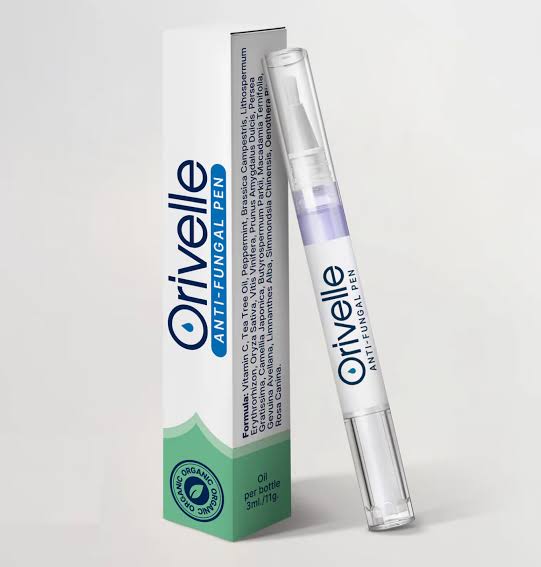
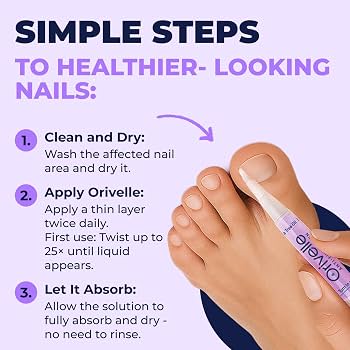
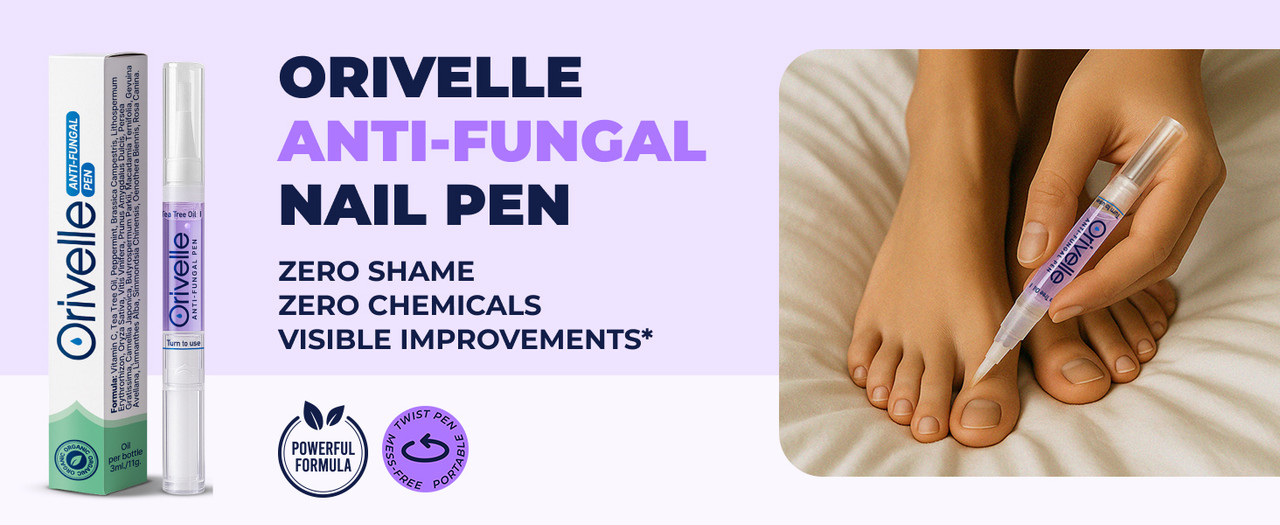
Pen-style applicators with plant-based ingredients like tea tree oil are a newer, lower-commitment category for people who want to start doing something without a prescription. Some individual ingredients (like tea tree oil) have documented antifungal properties in lab research — that's different from the finished cosmetic product being clinically proven to cure a diagnosed infection. Best understood as appearance-support for mild cases, used consistently, not a medical treatment.
Positioned by relative treatment strength (per the clinical sources cited above) against how much time, cost, or access commitment it requires.
A general guide, not a diagnosis — a doctor's evaluation is the only way to know for certain where a specific case falls.
| Option | Effectiveness (per sources cited) | Cost | Commitment |
|---|---|---|---|
| Oral prescription | Highest treatment potential | Prescription + possible labs | 3+ months |
| Topical prescription | Good for surface-level cases | Prescription | Up to 1 year |
| In-clinic laser | Temporary improvement, not a cure | High, often not covered | Multiple visits |
| OTC antifungal cream | Mixed, often insufficient alone | Low | Weeks-months |
| Cosmetic care pen (Orivelle) | Appearance support, not clinical cure | Low | Ongoing daily use |
See a doctor rather than self-treating if: the infection is painful, spreading to other nails, you have diabetes or a compromised immune system, or you've tried an over-the-counter or cosmetic approach for several weeks with no change. A doctor can also confirm it's actually fungal — some nail discoloration has other causes entirely.
Per WebMD and AAD, a few habits meaningfully lower your risk of getting nail fungus in the first place — or of it coming back after treatment, so you can stop thinking twice before slipping on sandals:
If you're dealing with a mild, early, cosmetic concern — not a painful or spreading infection — a daily-use plant-based pen is a low-commitment, no-prescription starting point. It's not a substitute for the medical options above if you need one, but for appearance-support with consistent use, it's a reasonable category to know about.
Real ingredients, what the pen actually does and doesn't do, pricing, and an honest FAQ.
The most common cause is a fungal infection (onychomycosis), which turns nails yellow, brown, or white and can make them thick, brittle, or foul-smelling over time. Less commonly, yellow or thickened nails can signal something else — aging, nail polish buildup, psoriasis, poor circulation, or the rare Yellow Nail Syndrome — so a doctor can confirm what's actually going on if you're unsure.
Nail fungus (onychomycosis) is typically caused by dermatophyte fungi that thrive in warm, moist environments — pool decks, locker rooms, and sweaty shoes are common exposure points. Risk goes up with age, diabetes, poor circulation, a weakened immune system, or existing athlete's foot.
Yes, it can spread between nails on the same person and can potentially spread to other people through shared damp surfaces like showers, pool decks, or nail salon tools that aren't properly sanitized.
Per Cleveland Clinic, oral prescription antifungal medications generally offer the most treatment potential, sometimes paired with a topical for better results. The right option depends on severity and your individual health, which is why a doctor's evaluation matters for anything beyond a very mild, early case.
No. Lasers are FDA-cleared for a "temporary increase of clear nail," not a cure, and cure rates are lower than oral or topical medication per Cleveland Clinic.
No. It doesn't resolve without treatment, and left alone it can worsen, become painful, or spread to other nails.