Before you buy anything, it helps to know what kind of cooler actually fits your space and climate — the difference between the two main types is bigger than most product pages let on.
"Portable air cooler" gets used as a catch-all term, but the products in this space generally work in one of two genuinely different ways — and which one fits you depends heavily on your climate, not just your budget.
Pulls air through a water-saturated pad or reservoir; as the water evaporates, it pulls heat out of the air. Genuinely lowers air temperature, but performance drops significantly in humid conditions since humid air already holds more moisture and can't absorb much more.
Moves existing air through the room without changing its temperature. Works consistently regardless of humidity, but doesn't actually cool the air — the cooling sensation comes from airflow across your skin, same principle as any fan.
The honest climate rule: if you live somewhere hot and dry, an evaporative cooler will genuinely lower the temperature in the room. If you live somewhere hot and humid, an evaporative cooler will underperform, and a bladeless fan or a proper AC unit is the more realistic choice.
These devices are built for personal or single-room cooling: a bedroom, home office, or small apartment space. They're not a substitute for central air conditioning in a whole home, and product marketing that implies otherwise is overstating what the underlying technology can do. Realistic expectations: noticeable relief in a room under roughly 200-550 sq ft (varies by unit), not whole-house climate control.
All four below, with the real basics on how each one works.
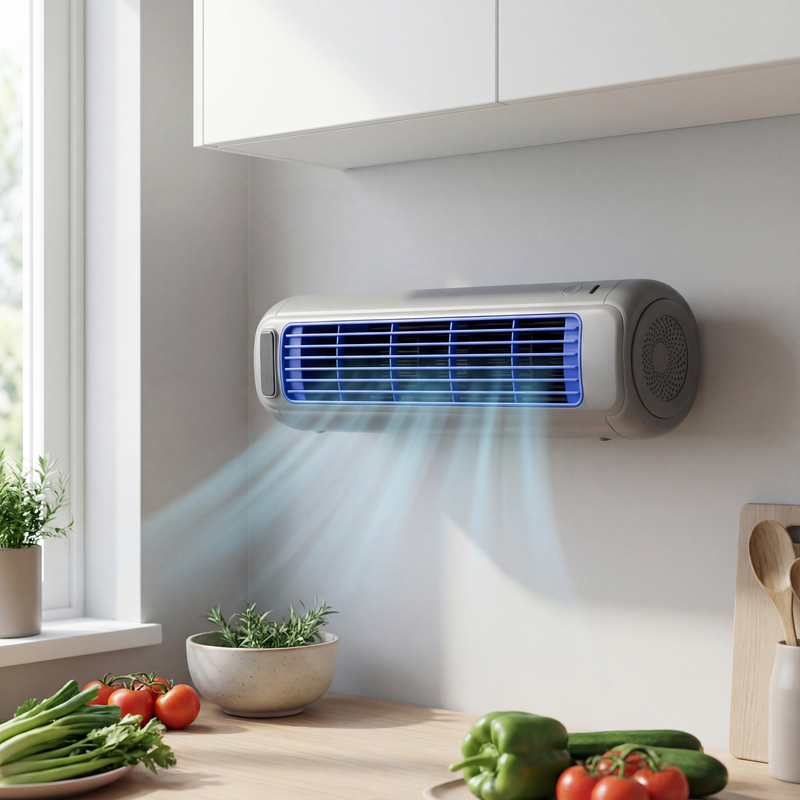
Portable, bladeless air cooler built for fast, room-level cooling without installation.
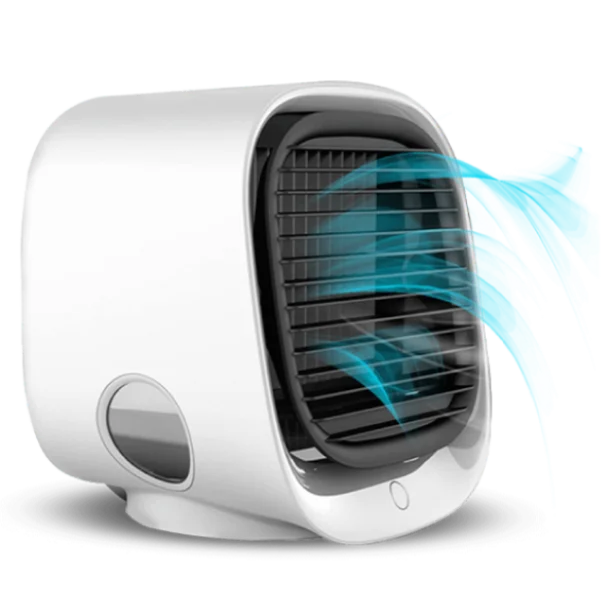
Compact, USB-powered evaporative cooler for personal and small-space cooling.
Portable evaporative air cooler with 3 fan speeds, covering up to 20m² (215 sq ft).
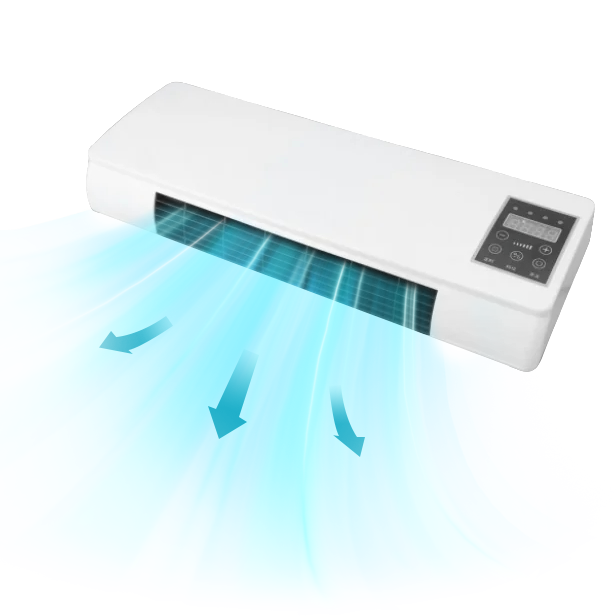
2-in-1 portable climate unit that cools and heats — no hose, no installation.
Not well. They cool air by evaporating water into it, which slows dramatically once the air is already humid. They perform best in hot, dry climates. In humid regions, a bladeless fan or a traditional AC unit generally serves better.
A bladeless fan moves existing air without lowering its temperature — it cools you through airflow alone. An evaporative cooler actively lowers air temperature by evaporating water, which also adds humidity.
Generally no. These are built for personal or single-room cooling, not whole-home climate control. Reasonable for a bedroom or office, but shouldn't be expected to perform like central AC.